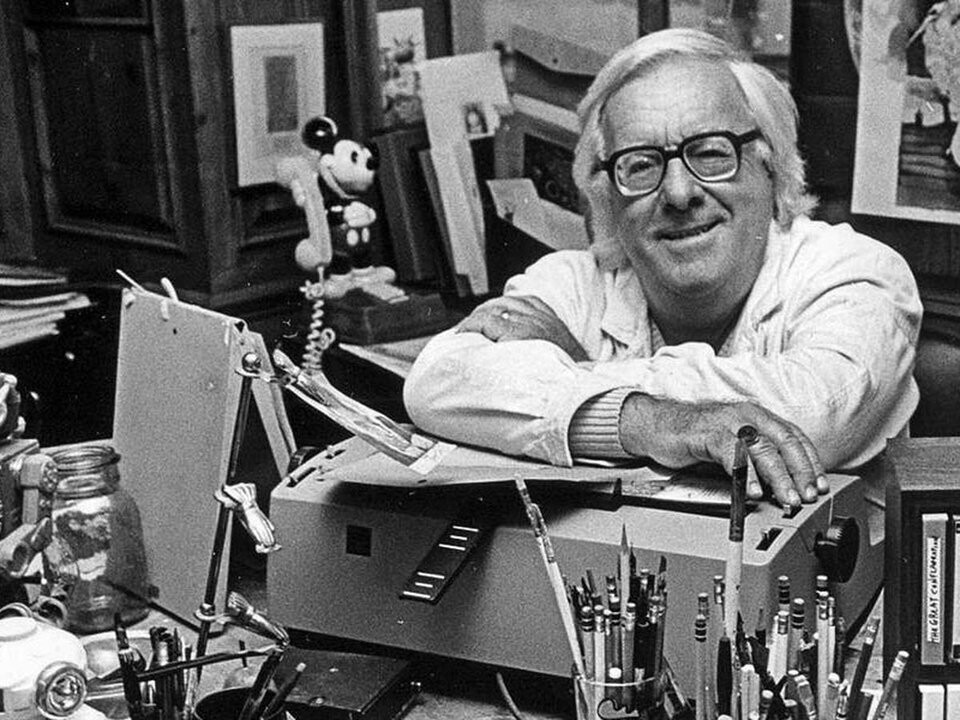
Ray Bradbury is considered one of the great masters of modern fantasy. His work combined imagination, lyricism, and a critical look at contemporary society. In Buenos Aires, March 1 (NA), a new edition of Ray Bradbury's short stories once again positions the American author (1920-2012) as a central figure in 20th-century short-story narrative, far beyond his label as a science fiction writer. The volume, edited by Paul Viejo, brings together everything from the most famous stories included in 'The Martian Chronicles' and 'The Illustrated Man' to less circulated texts or uncollected versions, proposing a chronological journey through the author's life and literary evolution. In the words of Jorge Luis Borges, in his literature he “put his long empty Sundays, his American boredom, his loneliness.” Born into a humble family, Bradbury did not attend university and was self-taught in public libraries, an institution he later actively defended. Other of his works were also adapted for the screen, such as 'The Illustrated Man', 'The Carnival of Souls' and the famous story 'The Sound of Thunder'. Throughout his career, he received awards such as the Seiun, the Locus, the World Fantasy Award, the Saturn, the Stoker, the Reino de Redonda and the Retro Hugo for best novel of 1953 for 'Fahrenheit 451'. The new edition thus reaffirms the relevance of an author whose fantastic narrative shaped the contemporary imagination for decades and consolidated a unique place in the universal literary tradition. He began publishing stories in magazines in the 1940s and in 1947 he released his first collection, 'Dark Carnival'. Mass recognition came with 'The Martian Chronicles' and, above all, with the dystopian novel 'Fahrenheit 451', published in 1953 and brought to the cinema by François Truffaut in an adaptation that became a classic.